A 7p-per-kWh overnight tariff and a 79p rapid charger can both power the same car. Yet one may cost roughly 2p per mile and the other more than 25p. That is why asking how much does EV charging cost needs a proper answer, not a headline figure designed to sell a car.
Your real charging cost depends on where you charge, when you charge, how efficiently your vehicle uses energy and whether the price shown includes the costs you actually pay. The useful number is not a national average. It is what your car actually costs to run.
How much does EV charging cost at home?
Home charging is usually the lowest-cost option because you pay your domestic electricity tariff rather than a public charging operator’s rate. Depending on your tariff and the time of day, electricity might cost anything from around 7p per kWh on a cheap overnight period to 25p, 30p or more at other times.
Take an EV that averages 3.5 miles per kWh. At 25p per kWh, the energy alone works out at about 7.1p per mile. At 8p per kWh overnight, it falls to around 2.3p per mile. Over 10,000 miles, that difference is not a technicality. It can mean hundreds of pounds a year.
The catch is that the battery does not receive every kWh you buy from the meter. Charging losses occur in the cable, onboard charger and battery management system. They vary with the car, charge speed, temperature and state of charge, but a home charging loss of roughly 8% to 15% is a reasonable working range for many drivers.
If your charger records 50 kWh delivered to the battery but your household meter shows 56 kWh used, your financial record should reflect the 56 kWh you paid for. Otherwise, your cost per mile will look better than it really is.
Your electricity standing charge is a separate judgement call. If you would have an electricity supply anyway, it is normally more useful to exclude the standing charge from vehicle energy cost. If you installed a dedicated supply or tariff specifically for charging, you may prefer to allocate part of it. The key is to choose a method and apply it consistently.
Public charging is priced for convenience
Public charging costs vary more sharply. Destination chargers at supermarkets, hotels, car parks and leisure venues may be free, included with parking, or charged at a moderate per-kWh rate. Faster AC and rapid DC chargers often cost more, while ultra-rapid sites are commonly the most expensive option.
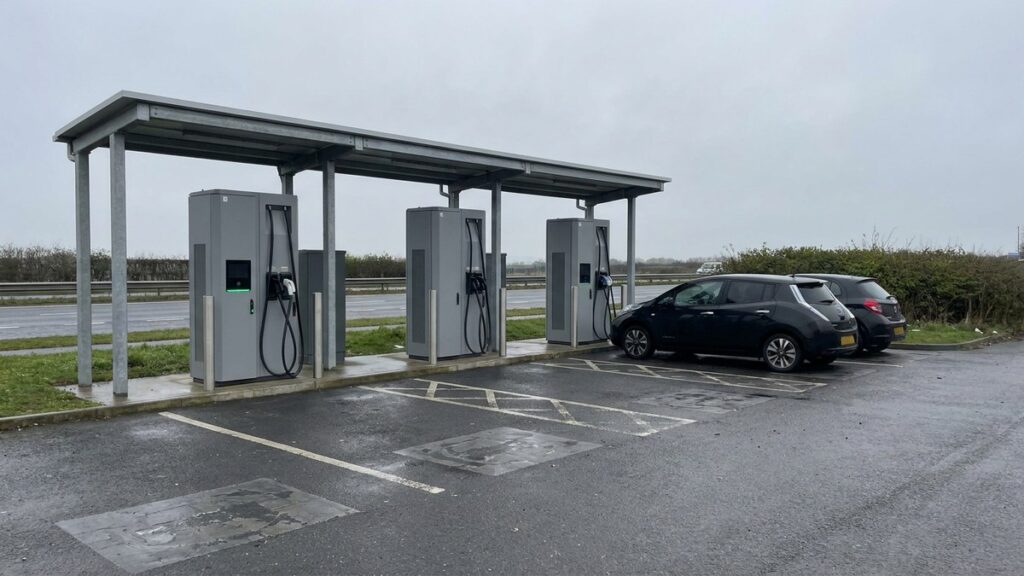
As a broad guide, paid public charging can range from around 40p to 85p per kWh, sometimes higher in premium locations. A car returning 3 miles per kWh at a 79p rapid charger costs about 26.3p per mile for energy. That may still be worthwhile when it gets you home, keeps a work journey moving or avoids a long wait. It is simply not equivalent to home charging.
Watch for costs that do not appear in the headline pence-per-kWh rate. Some networks apply idle fees after charging ends. Car parks may charge separately. A membership subscription can lower the unit price but only pays for itself if you use it often enough. Prepaid charging credit can also make a single session look free when the money was paid weeks earlier.
For honest reporting, log the session’s kWh, the amount paid and any related fee. Where a prepaid balance was used, record the charge against that balance rather than recording £0. The energy was not free – it was paid for earlier.
How much does EV charging cost per mile?
Cost per mile is the number that turns scattered charging receipts into a usable decision. The basic calculation is straightforward:
Charging cost per mile = total charging spend ÷ miles driven
It becomes reliable only when the underlying records are reliable. A month containing 900 home-charged miles, one expensive motorway rapid charge and a free workplace top-up will have a blended result. That is the point. Your blended figure shows how you actually drive, not how a brochure assumes you drive.
You can also estimate the energy cost before driving by using this calculation:
Cost per mile = electricity price per kWh ÷ miles per kWh
For example, 30p per kWh divided by 3 miles per kWh equals 10p per mile. But use it as a forecast, not a final answer. Winter heating, wet roads, motorway speeds, towing, short journeys and tyre pressures can all reduce efficiency. A cost estimate based on summer consumption may be optimistic for half the year.
Mileage should also match the period and vehicle. If you log charging spend for March but use an annual mileage estimate, the result is not an auditable cost per mile. Record odometer readings or journey mileage regularly, then compare like with like.
The tariff is only part of the bill
A cheap EV tariff does not automatically produce cheap driving. Some tariffs offer low overnight rates but higher daytime prices, minimum smart-meter requirements or time windows that do not fit your routine. If you regularly arrive home late, leave early or share charging capacity with another vehicle, the advertised rate may not be the rate you use.
Likewise, a public network’s lower member price may be attractive on paper but poor value if the monthly fee exceeds the savings. Work out the break-even point. If membership saves 10p per kWh and costs £8 a month, you need to buy more than 80 kWh through that network before it saves money.
Free workplace charging deserves the same discipline. It reduces your personal energy spend, but it may not be permanently available and can have tax implications depending on the arrangement. For a business user, record where the energy came from, what was paid and what evidence is available. That makes later reimbursement or accountant queries far less painful.
VAT and business records need the real transaction
Domestic electricity is generally charged at a lower VAT rate than public charging, which commonly carries the standard rate. That distinction matters for anyone separating personal and business travel, reclaiming eligible costs or preparing records for an accountant.
Do not reconstruct every charge from memory at year-end. Keep the receipt, invoice or app record while the transaction is still clear. Capture the date, location, kWh, gross amount, VAT where shown and payment method. If an employer reimburses home charging, retain the tariff evidence used to calculate the claim.
The same principle applies to marina shore power where a vehicle is charged from that supply. The electricity may be convenient, but its rate, billing method and permitted use can differ from a normal domestic charge. Treat it as its own source in the ledger rather than quietly folding it into home charging.
Do not confuse charging cost with total EV cost
Energy cost is only one layer of ownership. Insurance, tyres, servicing, repairs, finance, depreciation, home-charger installation and vehicle excise duty can materially change the annual picture. An EV can be cheap to charge yet expensive to own, or the reverse.
Keep three views where possible: energy-only cost per mile, running-cost cost per mile, and total cost of ownership per mile. The first answers whether your charging habits are economical. The second shows the cost of keeping the car on the road. The third is the number to use when comparing vehicles or deciding whether to replace one.
If you compare electric driving with petrol, use your own petrol baseline: the fuel price you would actually pay and the mpg your previous or alternative vehicle genuinely returns. A claimed 60 mpg petrol car and a real-world 42 mpg petrol car produce very different savings figures. Marketing comparisons rarely capture that.
Build a number you can defend
The practical habit is simple: log each charge when it happens, ideally from your mobile phone while you are still at the charger. Record the paid amount, kWh, charging source and receipt. Add mileage often enough that the calculation remains tied to reality, then include servicing, tyres, insurance and other costs separately when you want the wider ownership view.
Amperlo is built for that job: a single operational record for charging, mileage, receipts and vehicle costs, rather than a collection of optimistic averages. The result is not a promise about what EV driving should cost. It is a clear record of what yours costs.
The next time a charging price looks cheap or painful, do not judge it in isolation. Add it to the same ledger as every other session and let your own blended cost per mile tell you whether your charging routine is working.
